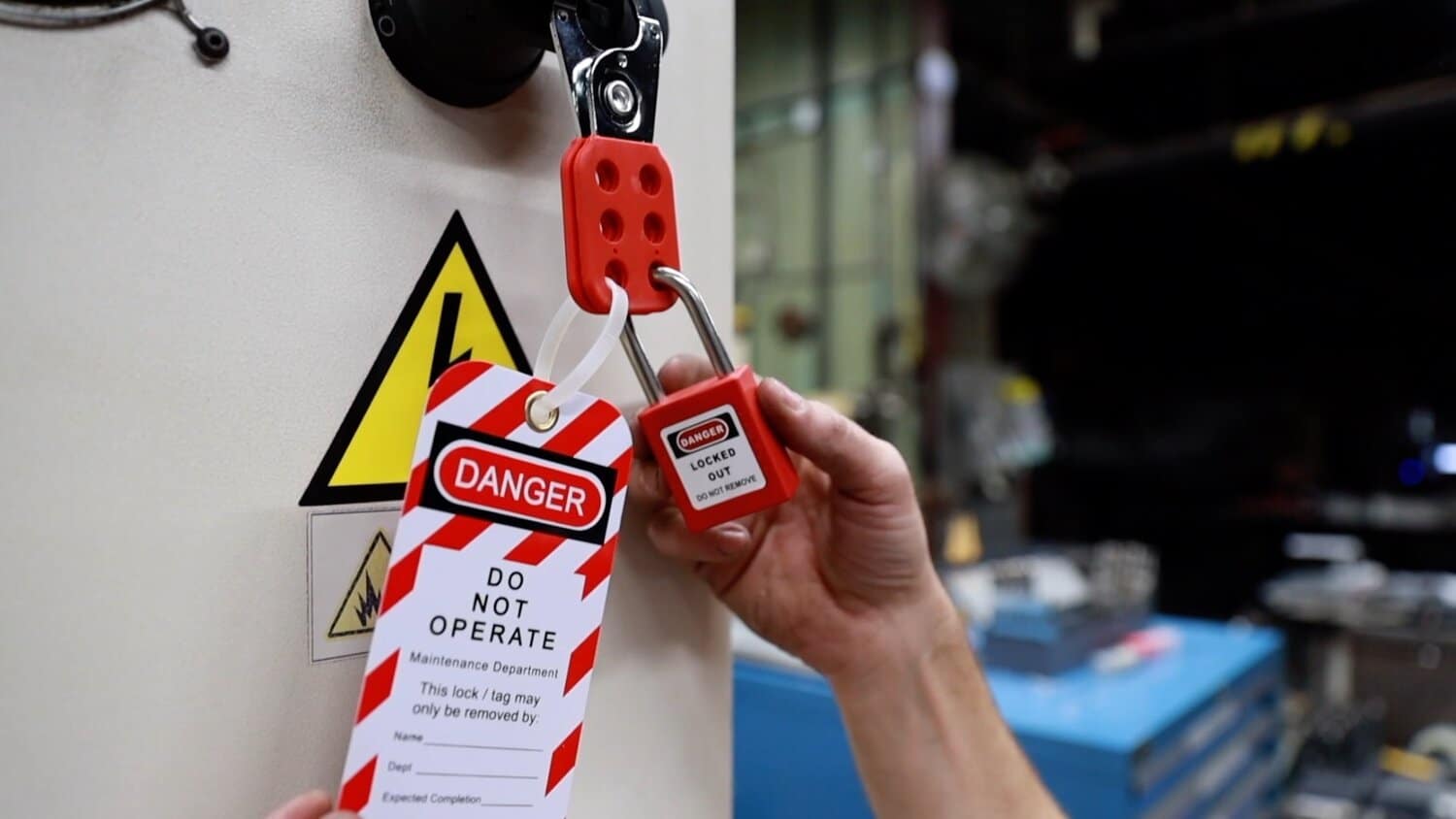
Machines don’t warn you before they start. A conveyor belt can lurch forward, a press can descend, or a valve can release steam—all without notice. That’s why knowing when a lockout tagout (LOTO) is applied isn’t just policy—it’s survival.
LOTO procedures exist to isolate hazardous energy sources and prevent accidental startup during maintenance. But confusion persists: Is LOTO needed for a quick cleaning? What if the task takes less than five minutes? The answer isn’t about time—it’s about risk.
The core rule is simple: If you’re performing service or maintenance where unexpected energization could harm someone, LOTO must be applied. Yet organizations still struggle with consistency, often skipping procedures due to urgency, oversight, or misunderstanding. This article breaks down exactly when LOTO applies, with real-world examples, common missteps, and compliance essentials.
What Triggers the Need for LOTO?
LOTO isn’t for every minor interaction with equipment. It’s specifically required when workers perform activities that expose them to hazardous energy during servicing or maintenance.
According to OSHA 29 CFR 1910.147, the Control of Hazardous Energy (Lockout/Tagout) standard, LOTO must be used whenever an employee:
- Removes or bypasses a guard or safety device
- Places any part of their body into a point of operation
- Reaches into a danger zone where machine components are operating
- Services or adjusts machinery that requires other energy sources to be shut off
Examples that trigger LOTO:
- Replacing a motor on a packaging line
- Clearing a jam in a conveyor system
- Repairing a hydraulic press cylinder
- Adjusting alignment on a robotic arm
- Servicing a pump connected to a high-pressure fluid line
These aren’t hypotheticals. In one documented case, a maintenance technician reached into a conveyor to clear a jam. The machine was "off," but not locked out. A coworker restarted it remotely. The result: severe hand injuries. This incident—and countless others—happens because LOTO wasn’t applied when it should have been.
Routine Production vs. Maintenance: Where the Line Is Drawn
One of the most common sources of confusion is distinguishing between routine production operations and maintenance work.
OSHA defines routine production work as tasks that are:
- Integral to the use of the equipment for production
- Done during normal operation
- Repetitive, minor, or necessary for ongoing operation
Examples where LOTO may not be required (under specific conditions):
- Normal clearing of minor jams on a packaging machine (if no hazardous energy exposure)
- Feeding materials into a machine with safeguards in place
- Basic cleaning during a shift using approved tools
But—and this is critical—if the task requires bypassing a guard, using tools, or reaching into a danger zone, LOTO applies.
For instance, if a jam requires a technician to use a crowbar to dislodge debris and insert their arm past the guard, LOTO is mandatory. The moment the task goes beyond what’s expected during normal operation, the lockout protocol kicks in.
A useful litmus test: "Would an untrained operator be expected to do this?" If the answer is no, LOTO is almost certainly required.
When LOTO Applies During Equipment Servicing and Repair
Servicing and repair are the most obvious triggers for LOTO—and also the most vulnerable to shortcuts.
Consider a facility maintaining an industrial mixer. The motor needs replacement. The electrician turns off the control switch and begins removing wires. But the main disconnect isn’t locked out. Another worker sees the mixer idle and powers it up for testing. Catastrophe follows.
This scenario illustrates two failures:
- Assuming “off” means safe – Control switches don’t always disconnect power at the source.
- Skipping energy isolation – True safety requires isolating energy at its origin (breaker, valve, etc.).
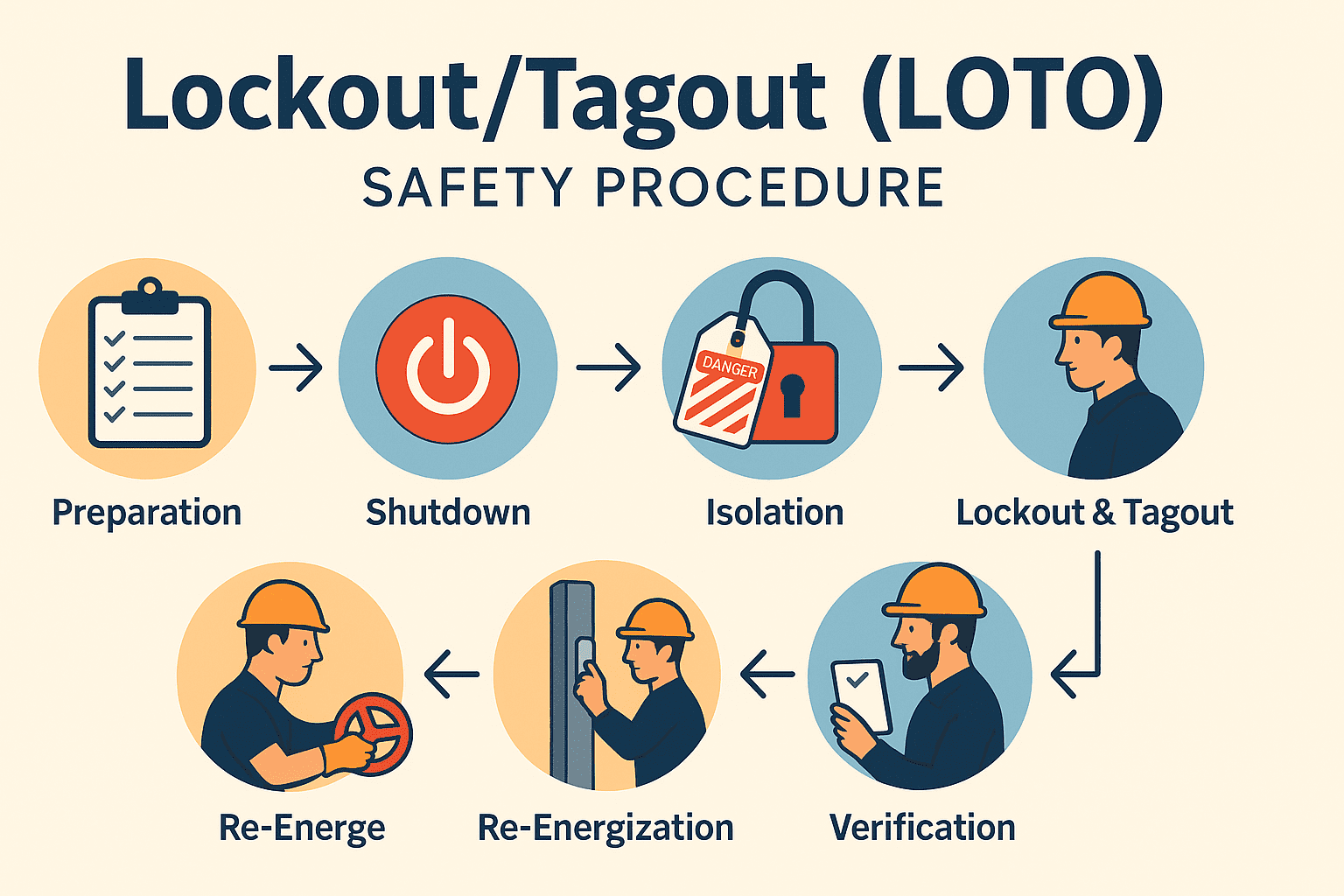
Correct LOTO workflow for servicing:
- Notify affected employees – Everyone nearby must know work is happening.
- Shut down equipment using normal controls – Stop the machine safely.
- Isolate all energy sources – Electrical, hydraulic, pneumatic, gravity, etc.
- Apply lockout devices – Each energy-isolating device gets a personal lock.
- Attach tags – Warn others not to re-energize.
- Release stored energy – Bleed pressure, lower suspended parts, block moving components.
- Verify isolation – Attempt to restart (safely) to confirm zero energy.
This sequence isn’t optional. It’s the backbone of every LOTO-compliant repair.
LOTO During Setup and Adjustments
Setup activities—especially in manufacturing—often fall into a gray zone. Operators adjust guides, align parts, and test parameters. Is LOTO needed?
Yes, if the adjustment involves exposure to danger zones.
For example, when setting up a stamping press for a new run, a technician may need to manually position dies. If hands enter the point of operation—even briefly—LOTO must be applied.
However, OSHA allows exceptions under the minor servicing exception (1910.147(a)(2)(ii)). This permits bypassing LOTO for minor tool changes or adjustments during normal production, provided:
- The activity is routine, repetitive, and integral to production
- Alternative protective measures are in place (e.g., presence-sensing devices, two-hand controls)
- The risk of exposure is minimal and controlled
But this exception is narrow. If a setup requires disabling a light curtain or reaching under a moving arm, LOTO applies—no exceptions.
Energy Types That Require LOTO
Many assume LOTO is only for electrical systems. In reality, any form of hazardous energy must be controlled.
| Energy Type | Example Sources | LOTO Action Required |
|---|---|---|
| Electrical | Motors, circuits, control panels | Lock breaker or disconnect switch |
| Hydraulic | Presses, lifts, actuators | Close and lock valves, relieve pressure |
| Pneumatic | Air-powered tools, clamps | Bleed air, isolate with lockable valve |
| Mechanical | Springs, belts, flywheels | Block, brace, or secure moving parts |
| Gravitational | Suspended loads, raised platforms | Use blocks or mechanical supports |
| Chemical / Thermal | Steam lines, reactors | Isolate valves, allow cooldown |
Failure to address non-electrical energy is a leading cause of LOTO-related incidents. A worker might lock the electrical supply to a hydraulic press but forget to release trapped fluid pressure. When they open a line, high-pressure fluid erupts—causing burns or injection injuries.
Best practice: Conduct an energy audit for each machine. Document every potential energy source and how it will be controlled during LOTO.
Situations Where LOTO Is Often Overlooked
Even experienced teams miss key moments to apply LOTO. These are common blind spots:
1. Cleaning Tasks Scrubbing a mixing tank? If you open the vessel and reach inside, stored energy (residual pressure, gravity collapse) could be present. LOTO applies.
2. Multiple Workers on One Machine Each technician must apply their own lock. A single lock doesn’t protect a team. The "group lockout" method uses a hasp with multiple locks—each worker keeps their key.
3. Contractors and Third Parties Outside technicians aren’t exempt. Host employers must ensure contractors follow site-specific LOTO procedures and coordinate control.
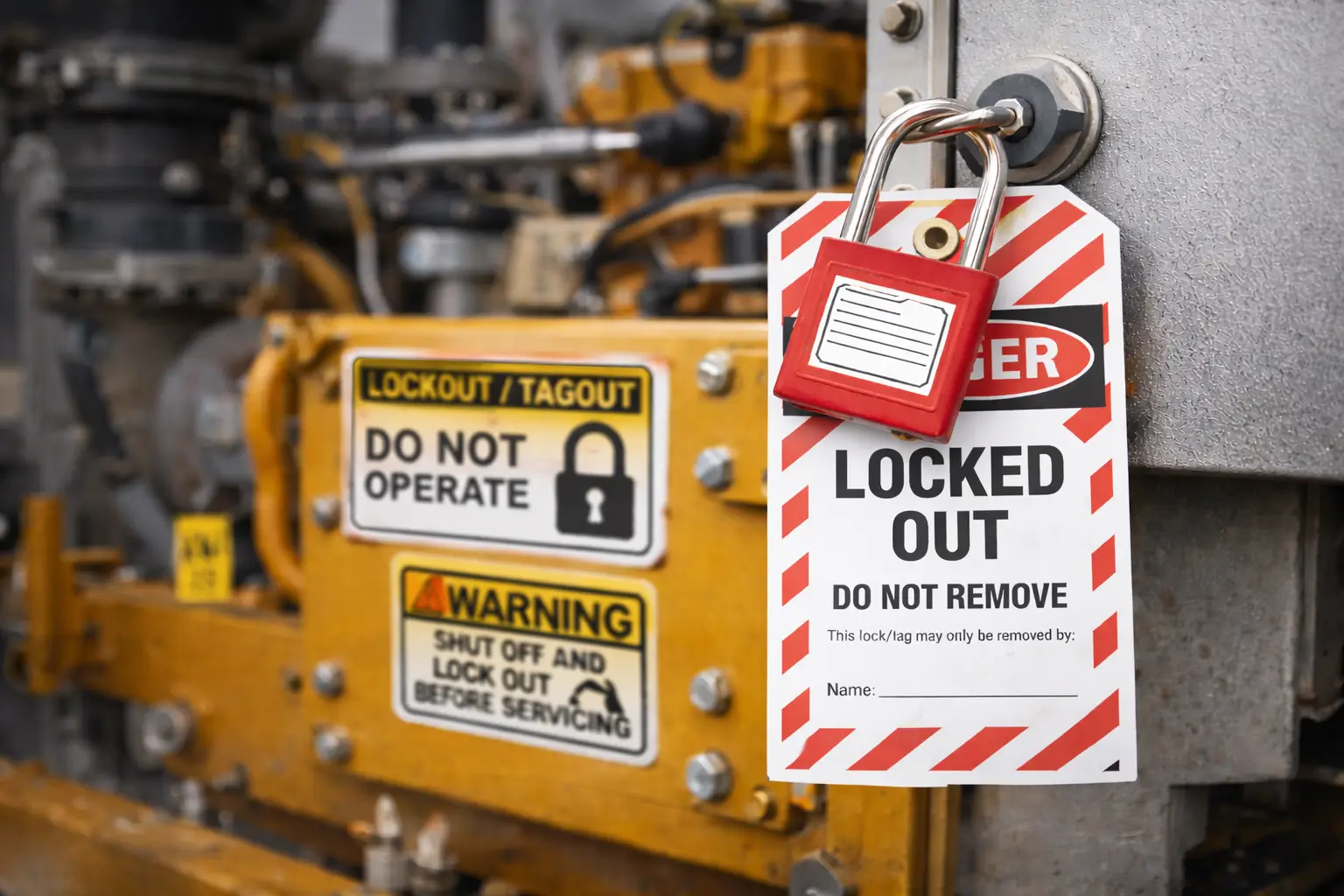
4. Shift Changes A lockout started at the end of one shift must remain in place until the work is complete. New workers inherit the lockout status—they don’t get to ignore it.
5. Temporary Repairs Even a five-minute fix requires full LOTO. Speed doesn’t excuse risk. One second of exposure can result in life-altering injury.
Real-World LOTO Application: A Case Study
Facility: Automotive parts manufacturer Equipment: Robotic welding cell Incident: A technician entered the cell to adjust a sensor. The robot wasn't locked out. It activated during a cycle test and struck the worker, causing shoulder dislocation and bruising.
Root causes: - Assumption that “low-risk” adjustment didn’t need LOTO - No energy isolation performed - Tagout used without lockout (tag was ignored)
Corrective actions: - Revised LOTO policy to include all entries into guarded areas - Installed lockable access gates with interlocks - Mandated dual verification before re-energizing
This case underscores a hard truth: if access requires bypassing a safeguard, LOTO must be applied—regardless of task duration or perceived risk.
Common Mistakes That Undermine LOTO Effectiveness
Even when LOTO is applied, errors in execution can leave workers exposed.
- Using tags without locks – Tags are warnings, not physical restraints. Locks prevent activation.
- Not verifying zero energy – Never assume. Test the circuit, check the pressure gauge, try to move the part.
- Sharing lock keys – Each lock must be under the sole control of the person who applied it.
- Skipping documentation – Every LOTO event should be logged: who, what, when, and energy sources isolated.
- Rushing removal – Locks should only be removed by the person who applied them, after confirming the area is clear.
A lockout should be deliberate, documented, and resistant to complacency.
Final Word: Apply LOTO Whenever Risk Exists
Knowing when a lockout tagout (LOTO) is applied isn’t about memorizing rules—it’s about cultivating a mindset. Every time a worker interacts with machinery beyond normal operation, they must ask: Could this machine hurt me if it starts?
If yes, LOTO applies.
It doesn’t matter if the task is fast, routine, or “just this once.” Hazardous energy doesn’t negotiate. It doesn’t care about production quotas or overtime. It only responds to discipline.
Implement clear procedures. Train rigorously. Audit consistently. And never allow exceptions that trade safety for speed.
Because the cost of skipping LOTO isn’t measured in minutes saved—it’s measured in lives altered.
Frequently Asked Questions
When should LOTO be used during machine maintenance? LOTO must be used whenever servicing, repairing, or adjusting machinery that exposes workers to hazardous energy sources.
Is LOTO required for cleaning equipment? Yes, if cleaning requires removing guards or reaching into danger zones. Minor cleaning during normal operation may not require LOTO.
Can tagout be used instead of lockout? Tagout alone is acceptable only if a lock cannot be applied, and additional safety measures are in place. Lockout is always preferred.
Do contractors need to follow LOTO procedures? Yes, all employees and contractors must follow the site’s LOTO policies and coordinate control of hazardous energy.
What happens if a worker removes a lock without authorization? Unauthorized removal is a serious violation and can result in injury, disciplinary action, or OSHA penalties.
Can multiple people work on the same machine under one lock? No. Each worker must apply their own lock using a group lockout device or hasp.
Is LOTO required if the machine is unplugged? Only if unplugging fully isolates all energy sources. In industrial settings, a plug is rarely sufficient—disconnects and valves must be locked.
FAQ
What should you look for in When a Lockout Tagout (LOTO) Is Applied: Key Scenarios? Focus on relevance, practical value, and how well the solution matches real user intent.
Is When a Lockout Tagout (LOTO) Is Applied: Key Scenarios suitable for beginners? That depends on the workflow, but a clear step-by-step approach usually makes it easier to start.
How do you compare options around
When a Lockout Tagout (LOTO) Is Applied: Key Scenarios? Compare features, trust signals, limitations, pricing, and ease of implementation.
What mistakes should you avoid? Avoid generic choices, weak validation, and decisions based only on marketing claims.
What is the next best step? Shortlist the most relevant options, validate them quickly, and refine from real-world results.