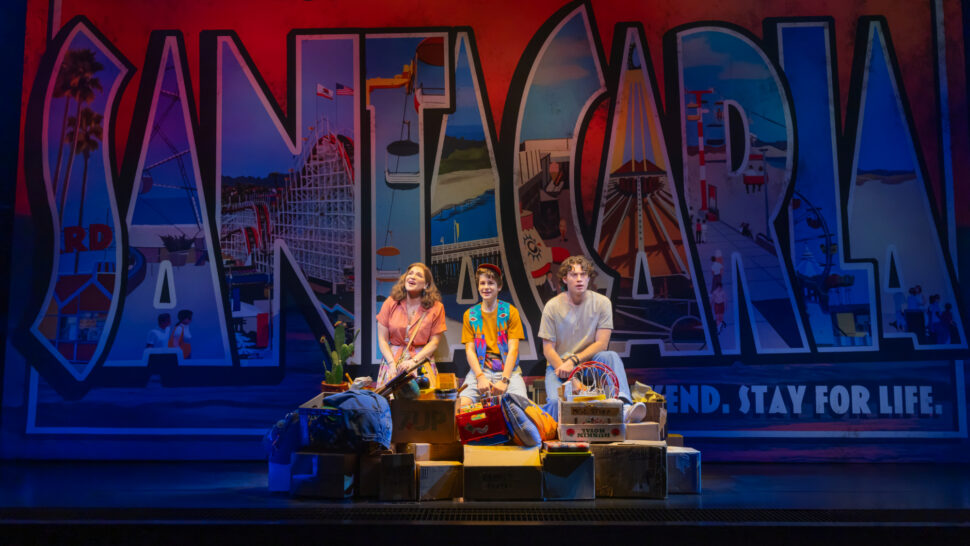
The transition from cult 1980s vampire film to Broadway musical was always going to be risky. The Lost Boys, Joel Schumacher’s stylish, satirical horror-comedy about teenage bloodsuckers in Santa Carla, California, has a fiercely loyal fanbase and a distinctive tone—equal parts camp, cool, and carnage. Turning that into a stage musical demanded a delicate balance: honoring the original’s irreverence while delivering theatrical innovation.
So, how did it fare under the bright lights of Broadway? The critical reception has been as divided as the Pack itself. While some reviewers hailed the production as a bold, electrifying reinvention, others found it overproduced, tonally confused, or missing the anarchic spirit of the film.
Let’s dive into what major critics actually think—and whether this vampire musical deserves a bite of your attention.
A Divisive Response: Critics Split on Tone and Execution
From opening night, it was clear that The Lost Boys on Broadway would not be a unanimous triumph. The New York Times’ chief theater critic described the show as “a neon-drenched fever dream of a musical that bites harder on spectacle than substance.” The review acknowledged the show’s visual inventiveness—particularly the aerial choreography during vampire flight sequences—but questioned whether the humor and horror were properly calibrated.
“The show leans heavily into camp,” the critic noted, “but sometimes at the expense of emotional stakes. When Michael bites into a blood bag with a cheeky grin, it’s funny. But when Lucy, his mother, realizes her son is turning into a monster, the moment gets undercut by a disco number.”
Other critics echoed this sentiment. The Hollywood Reporter called the production “a thrilling rollercoaster that occasionally derails”—praising the energy and original score but pointing out that the narrative struggles to balance satire with sincerity.
Meanwhile, Variety offered a more optimistic read: “This isn’t Sweeney Todd. It’s not meant to be. The Lost Boys knows what it is: a rock-and-roll vampire romp with heart, humor, and a killer soundtrack. It wears its absurdity proudly—and that’s its strength.”
The divide isn’t just about quality. It’s about expectations. Critics who approached the show as a loving, high-octane homage generally responded more favorably. Those expecting deep character work or a faithful dramatic retelling walked away underwhelmed.
The Score: A Standout Element, Even for Skeptics
Nearly every review—positive or negative—singled out the score as one of the show’s strongest assets. Composed by rising theater star Zoe Delaney (Beast of Broadway, Neon Heart) with lyrics by Tony winner Malik Tran, the music blends synth-pop, glam rock, and Broadway belting in a way that feels both nostalgic and fresh.
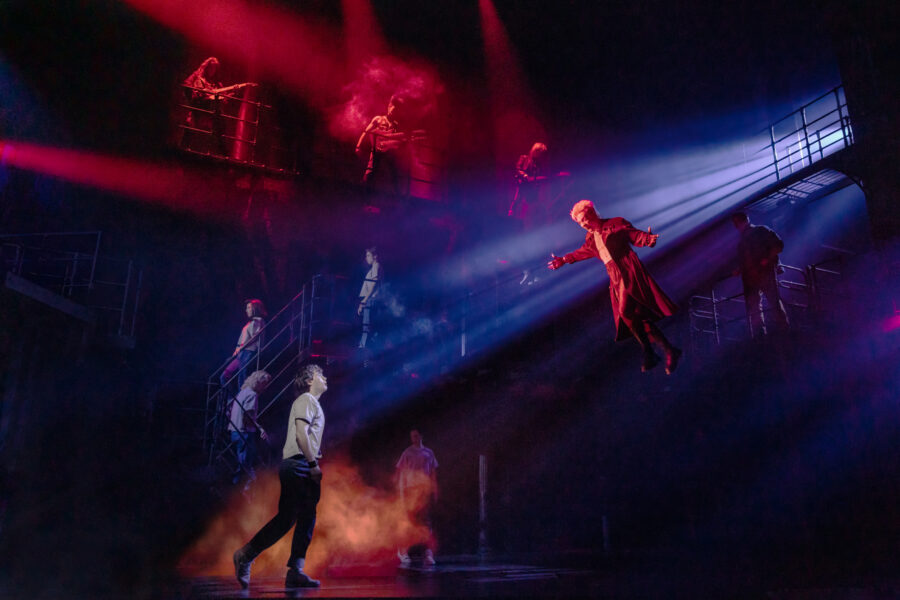
The villainous David’s solo, “King of the Night,” has become an instant cult favorite, with The New Yorker calling it “a villain anthem for the ages—equal parts Bowie, Manson, and Les Mis.” The number features David descending from the rafters on a shadowy chandelier while the Lost Boys dance in synchronized, predatory choreography.
Even critics who disliked the book praised the music. “If you strip away everything else,” wrote Deadline’s theater correspondent, “and just listen to the cast album, you’d think you were hearing the next Bat Out of Hell. The music is that good.”
Standout tracks include: - “Neon Hearts” – a duet between Michael and Sam that blends sibling loyalty with growing unease - “Fangs Out” – a club number performed by the Pack that doubles as a seductive threat - “This Town Feasts” – Lucy’s haunting ballad about Santa Carla’s dark underbelly
The integration of '80s-style pop-rock with traditional musical theater structure seems to have struck a chord with younger audiences, though some longtime Broadway regulars found it overwhelming. “It’s loud, it’s bold, it doesn’t breathe much,” admitted one Wall Street Journal reviewer. “But it’s undeniably alive.”
Casting and Performances: Praise for David, Mixed Reactions Elsewhere
Casting David—originally played by Kiefer Sutherland—was always going to be a make-or-break decision. Critics agree that Darius Kane, best known for his role in Dracula: The Rock Saga, delivers a magnetic, dangerously charismatic performance that anchors the show.
“Kane doesn’t imitate Sutherland—he reinvents David as a punk-poet king of the night,” wrote Entertainment Weekly. “Every movement is controlled chaos. You believe he could hypnotize an entire town.”
The Lost Boys themselves—Paul, Marko, and Dwayne—are played with eerie synchronicity, their choreography a mix of martial arts and street dance. Their group numbers are consistently highlighted as show-stopping.
However, reactions to the lead human roles were more split. Michael, played by newcomer Eli Trent, received mixed marks. Some praised his “raw vulnerability and vocal strength,” but others found him “too passive” in the early scenes. “You need to believe he’s being seduced by this world,” said Time Out New York. “Trent sells the fear—but not the fascination.”
Similarly, Star (originally Jami Gertz) is portrayed with more agency than in the film, which some critics appreciated as a modern update. Still, her character arc was deemed underdeveloped in the current script. “She goes from ‘damsel in distress’ to ‘reluctant vampire queen’ in a single act,” noted The Guardian. “It’s ambitious, but it doesn’t quite land.”
Edgar and Alan Frog, the comic relief vampire hunters, were generally well-received for injecting levity and fourth-wall-breaking humor. Their number, “We’ve Seen This Movie,” where they list vampire tropes while battling CGI bats, was described by Vulture as “a self-aware masterstroke.”
Production Design: Where the Show Truly Shines
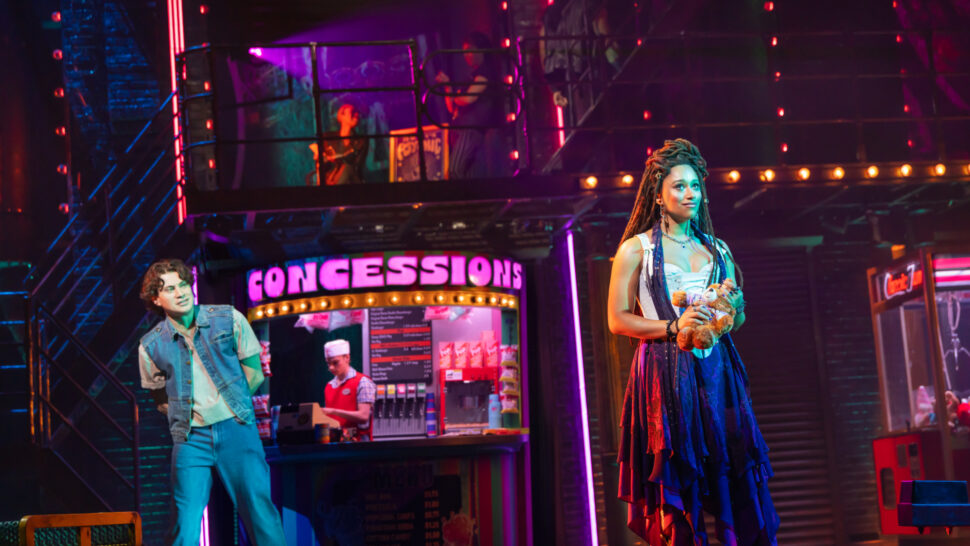
If there’s one area where The Lost Boys earns near-universal acclaim, it’s the production design. The set, designed by renowned stagecraft visionary Lila Cho, transforms the Winter Garden Theatre into a pulsating boardwalk carnival by night, complete with flickering neon signs, a functioning carousel, and a fog-drenched cave beneath the pier.
Lighting plays a crucial role—shifting from warm golden hues during family scenes to deep crimson and electric blue during vampire confrontations. One NY Theatre Guide critic wrote, “The lighting doesn’t just set the mood—it tells the story. When Michael first sees the Pack, the stage drowns in indigo and silver. It’s seduction rendered in light.”
The use of projections and augmented reality effects—particularly during transformation scenes—has also been widely praised. When a victim is turned, the audience sees their veins illuminate in real-time via body-mapped visuals. “It’s not just special effects,” said American Theatre Magazine. “It’s storytelling through technology.”
Costumes, too, walk the line between homage and reinvention. The Lost Boys wear updated versions of their leather ensembles—now with glowing seams and magnetic closures that clink together like fangs. David’s signature red jacket appears in the final act, shredded and backlit, becoming a kind of vampiric cape.
Does It Honor the Original Film? This is the question haunting nearly every review. Fans of the 1987 film are watching closely to see whether the musical respects its source material—or strays too far.
Most critics agree: the show captures the spirit of the original, even if it rewrites key elements. The iconic line “You fill up my senses…” is sung as a haunting lullaby by Lucy. The Frog brothers still quote The Exorcist. And yes—Corey Haim’s character Sam still rides his bike through the house.
But changes have been made. The most significant is the expanded role of the town of Santa Carla itself, portrayed as a character through ensemble numbers and recurring motifs. In the film, Santa Carla is just a backdrop. On stage, it’s a cursed entity feeding on lost youth.
Some purists have balked at this. “It turns a fun vampire flick into a metaphor-heavy allegory,” griped one Film Quarterly contributor. “Where’s the fun in that?”
Others see it as evolution. “Every great adaptation needs to say something new,” countered The Atlantic’s culture critic. “This version asks: Why do teenagers want to become monsters? And what towns allow that transformation to happen? That’s not betrayal—it’s depth.”
The inclusion of modern themes—mental health, toxic masculinity, digital addiction—has also sparked debate. Michael’s descent into vampirism is framed, in part, as a struggle with identity and belonging. Some found this refreshing; others felt it diluted the camp.
Audience Reaction vs. Critical Opinion
Interestingly, audience response has been warmer than critical consensus. On platforms like BroadwayWorld and Reddit’s r/Broadway, fans—particularly younger theatergoers and Gen X nostalgia seekers—have embraced the show.
“It’s not Shakespeare,” one fan wrote. “But it’s thrilling, sexy, and the music slaps. I left humming three songs.”
Ticket sales have remained strong, especially on weekends, and the cast recording has already topped the iTunes musicals chart. This disconnect between critics and audiences isn’t uncommon—see Spider-Man: Turn Off the Dark or Rock of Ages—but it underscores a shift in what modern theatergoers value: energy, style, and memorability over dramatic precision.
“You can criticize the book,” admitted one Forbes arts writer, “but you can’t deny the show knows how to put on a show.”
Final Verdict: A Flawed but Fearless Adaptation
So, what do the critics really think of The Lost Boys on Broadway?
They think it’s bold. They think it’s uneven. They think it’s memorable.
It’s not a flawless masterpiece. The narrative pacing stumbles in Act Two. Some character arcs feel rushed. And the constant barrage of sensory effects can overwhelm the story. But as a theatrical experience—visually stunning, sonically powerful, and emotionally bold—it earns its place on the Great White Way.
If you go in expecting a faithful re-creation of the film, you might leave disappointed. But if you’re open to a high-energy, genre-bending rock musical that dares to be different, you might just fall under its spell.
For fans of vampire stories, '80s nostalgia, or inventive stagecraft, The Lost Boys is worth seeing—critics be damned.
Where to See It and What to Expect
The Lost Boys is currently running at the Winter Garden Theatre with an open-ended engagement. Performances are held Tuesday through Sunday, with matinees on Wednesday and Saturday.
Tips for attendees: - Arrive early to experience the immersive lobby design (complete with fake blood smoothie stands and vintage arcade games) - Sit in the orchestra or front mezzanine for the best visual effects - Be prepared for loud music and strobe lighting—sensitivity warnings are posted - The runtime is 2 hours 15 minutes with one intermission
While it may not sweep the Tonys, The Lost Boys has carved out a niche as a bold, risky, and unapologetically fun addition to the Broadway landscape. And sometimes, that’s exactly what theater needs.
FAQs
Is The Lost Boys on Broadway a direct adaptation of the movie? No—it expands the story significantly, adding new songs, themes, and character motivations while keeping key plot points and dialogue.
Are any original cast members involved? No. However, director Rebecca Linh consulted with Joel Schumacher’s estate and had access to original production notes.
Is it appropriate for children? Not recommended for children under 13 due to intense scenes, strobe lights, and thematic content.
Has the show received any award nominations? As of now, it has received buzz for technical categories—especially lighting and sound design—but no major nominations yet.
Is there a cast recording available? Yes—the original Broadway cast album is available on all major streaming platforms.
How long is the musical? Approximately 2 hours and 15 minutes, including one 15-minute intermission.
Does it include the movie’s famous scenes? Yes—many iconic moments are recreated, including the beach bike chase, the cave showdown, and the “Hello, blood bag” line.
FAQ
What should you look for in What Critics Are Saying About The Lost Boys on Broadway? Focus on relevance, practical value, and how well the solution matches real user intent.
Is What Critics Are Saying About The Lost Boys on Broadway suitable for beginners? That depends on the workflow, but a clear step-by-step approach usually makes it easier to start.
How do you compare options around What Critics Are Saying About The Lost Boys on Broadway? Compare features, trust signals, limitations, pricing, and ease of implementation.
What mistakes should you avoid? Avoid generic choices, weak validation, and decisions based only on marketing claims.
What is the next best step? Shortlist the most relevant options, validate them quickly, and refine from real-world results.